

Introduction
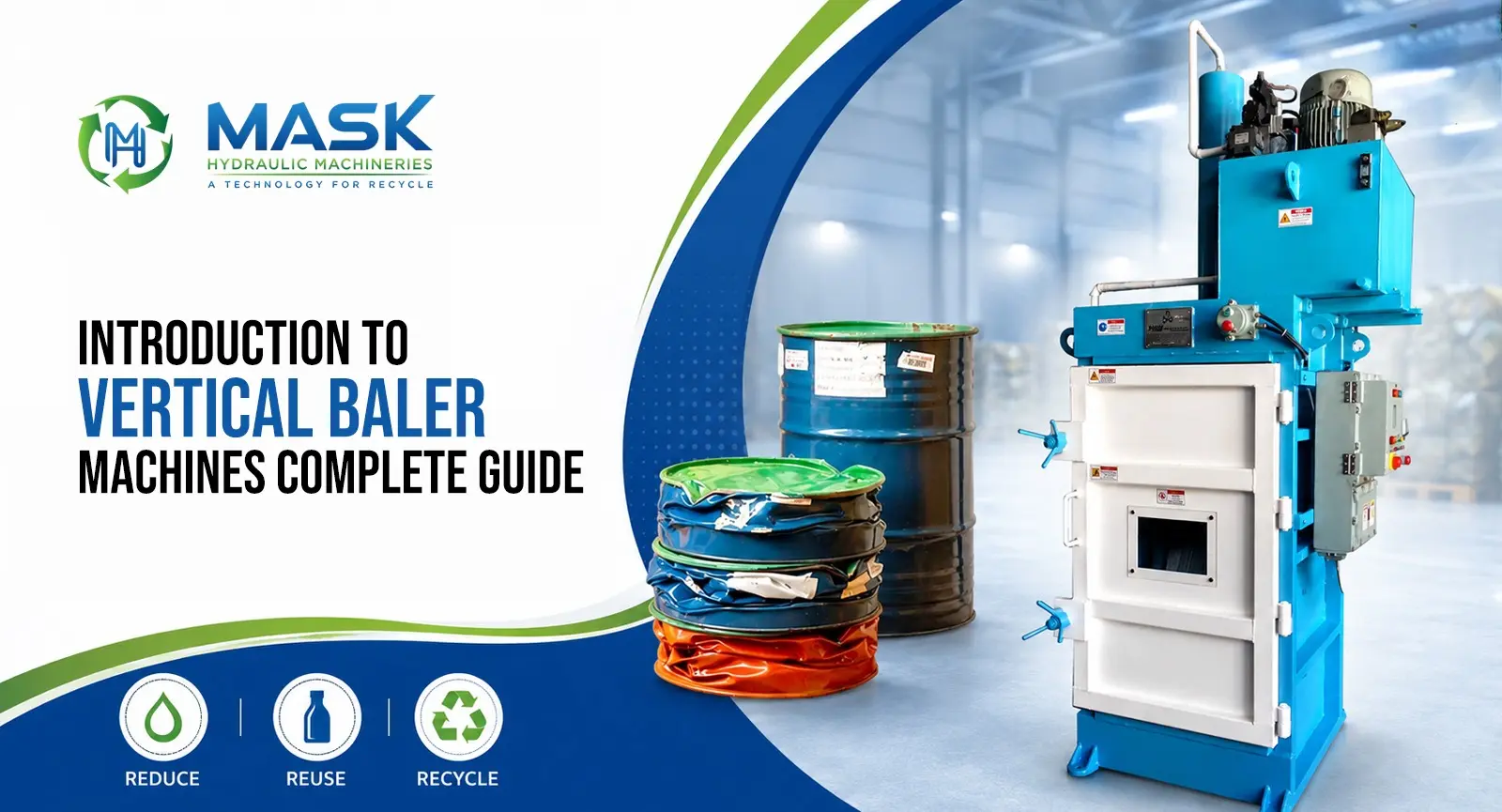
Loose scrap, cardboard, and plastic waste pile up fast in any facility that generates a decent volume of it, and dealing with that pile is a problem most businesses run into sooner or later. A vertical baler machine solves this in a fairly direct way: it compresses the waste into tight, stackable bales instead of letting it sit around taking up floor space. This guide covers what a vertical baler actually does, how it’s built, the different types you’ll come across, and what matters when picking one for your own operation.
What Is a Vertical Baler Machine?
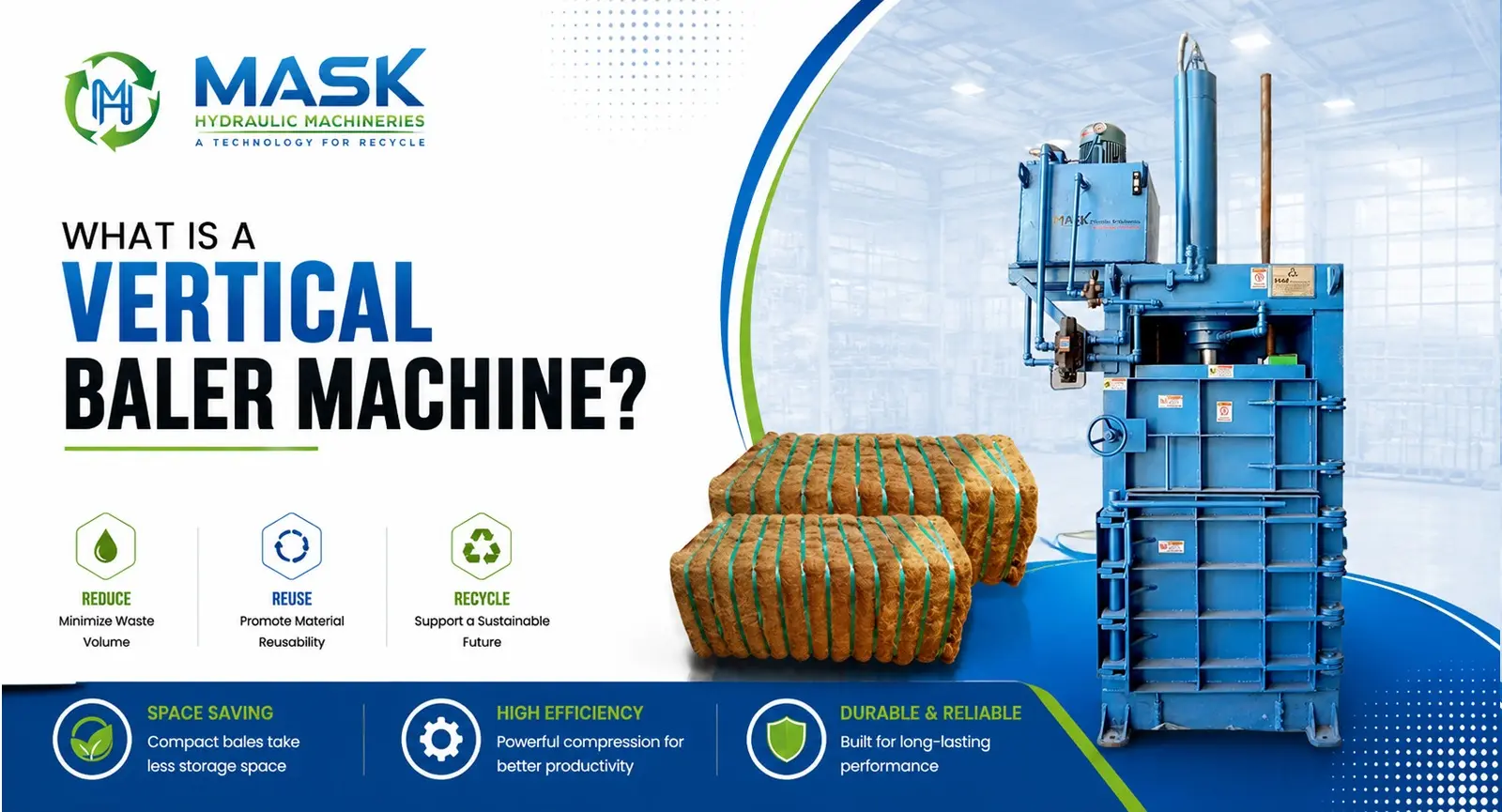
A Vertical Baler Press Machine is a piece of waste management equipment that compresses recyclable or scrap materials vertically, using a hydraulic ram that pushes down from the top of a loading chamber. Once the material is compressed enough, it gets tied off with wire or strapping and ejected as a finished bale.
It’s often referred to as a scrap baling press machine, and functionally, that’s exactly what it is, a press built specifically for turning loose scrap into compact, uniform bales. Compared to letting waste pile up loosely, a vertical baling machine can shrink that same volume down to a fraction of the original space, which makes a real difference for any business paying for storage or waste collection by volume.
How a Vertical Baler Actually Works
The process itself is fairly straightforward, and that simplicity is part of why these machines are so widely used.
- Material gets loaded into an open chamber at the top of the machine, either manually or through a feed conveyor
- A hydraulic ram descends from above and compresses the material downward under significant pressure
- Once compressed, the operator (or an automated system, in newer models) straps or wires the bale to hold its shape
- The chamber door opens, and the finished bale is pushed out, usually onto a pallet or directly onto the floor
Most cycles take just a few minutes from loading to ejection, which is part of why these machines fit so well into busy retail backrooms and small-to-mid-sized processing facilities where floor space and staff time are both limited.
Why Businesses Use Vertical Balers
The appeal of a vertical baler usually comes down to a handful of practical, recurring problems it solves:
- Space savings – Loose waste takes up far more room than compressed bales, freeing up storage or dock space for actual inventory
- Lower waste collection costs – Many haulers charge by volume or pickup frequency, so denser bales mean fewer pickups
- Better resale value – Recyclers generally pay more for clean, compacted bales than for loose, mixed scrap
- Improved workplace safety – Loose cardboard and plastic piling up creates trip hazards and clutter that baling eliminates
- Simpler waste handling – Strapped bales are easier to stack, move, and load onto trucks than loose material ever is
For businesses generating a steady volume of recyclable waste, these savings tend to add up fast enough that the machine pays for itself within a reasonably short window.
Types of Vertical Baler Machines
Not every scrap baling press machine is built the same way, and the type you need usually comes down to what material you’re handling and how much of it you’re dealing with:
- Single ram vertical balers — the most common type, suited for general-purpose baling of cardboard, plastic, and paper
- Two-ram vertical balers — used where higher output or continuous operation is needed, since one ram can compress while the other ejects
- Manual door vs. auto-tie balers — auto-tie models handle the strapping process automatically, reducing manual effort and speeding up the cycle
- Low-capacity vs. high-tonnage models — smaller retail or office setups need lower tonnage machines, while scrap yards and large manufacturing units typically need much higher pressing force
Picking the right type usually starts with figuring out your daily waste volume and what kind of material makes up most of it.
Types of Materials You Can Bale
A vertical baler isn’t limited to just one kind of waste. Common materials include:
- Cardboard and corrugated boxes
- Plastic film, shrink wrap, and packaging
- Paper waste and office scrap
- Foam and polystyrene (with the right baler configuration)
- Textile scraps and fabric waste
- Aluminum cans and light metal scrap, in some heavier-duty models
The right baler for your operation really depends on which of these materials you’re generating most, since chamber size and ram force both affect how well certain materials compress.
Applications of Vertical Baler Machines
You’ll find these machines across a wide mix of industries, not just large-scale recycling plants:
- Retail stores and supermarkets, dealing with constant cardboard and plastic packaging waste
- Warehouses and distribution centers, managing packaging materials at scale
- Manufacturing units, generating consistent scrap from production processes
- Print shops and offices, handling paper waste
- Recycling and waste management facilities, processing mixed material streams
Basically, if a business generates a steady stream of bulky recyclable waste and has limited space to store it, a vertical baler is usually worth considering.
Vertical Baler vs Horizontal Baler
This comparison comes up a lot, so here’s the short version:
- Space needed: Vertical balers take up less floor space, which suits smaller facilities
- Throughput: Horizontal balers handle much higher volumes, better suited to large-scale operations
- Operation: Vertical balers are usually manually loaded, while horizontal balers often run with conveyor feeding for continuous operation
- Cost: Vertical balers are generally more affordable, both upfront and in terms of installation
If your waste volume is moderate and space is tight, a vertical baler machine usually makes more sense. Larger operations with continuous, high-volume waste streams tend to lean toward horizontal machines instead.
What to Check Before Buying One
Before settling on a specific machine, it’s worth confirming a few things with your supplier:
- Chamber size, since this determines how much material fits per cycle
- Ram force (tonnage), which affects how dense and tight the final bales come out
- Cycle time, particularly important if your waste volume is high
- Safety features, like interlocked doors and emergency stops, which matter a lot given the force involved
- After-sales support, including spare parts availability and servicing response time
Skipping this step and buying based on price alone often leads to a machine that either underperforms for your actual waste volume or turns out to be more capacity than you actually need.
Why Choose Mask Hydraulic Machineries
Mask Hydraulic Machineries manufactures and supplies vertical baler machines built around real operational needs, rather than offering a single generic model for every business. Their team works through chamber size, tonnage, and automation requirements upfront, backed by dependable after-sales support and easy access to spare parts.
FAQs

Mask Hydraulic Machiners
Mask Hydraulic Machineries, based in Ahmedabad, Gujarat, is a trusted leader in the manufacturing and supply of high-performance baling equipments.
Comments are closed