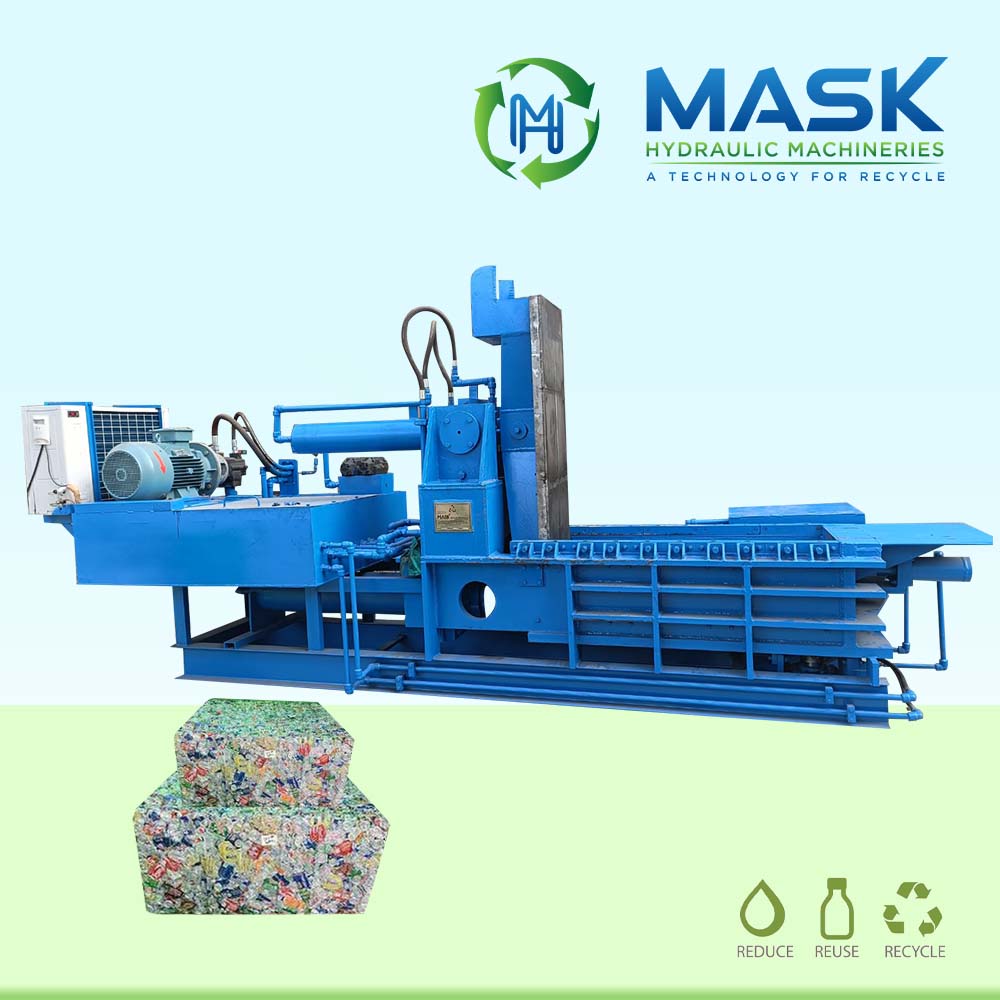
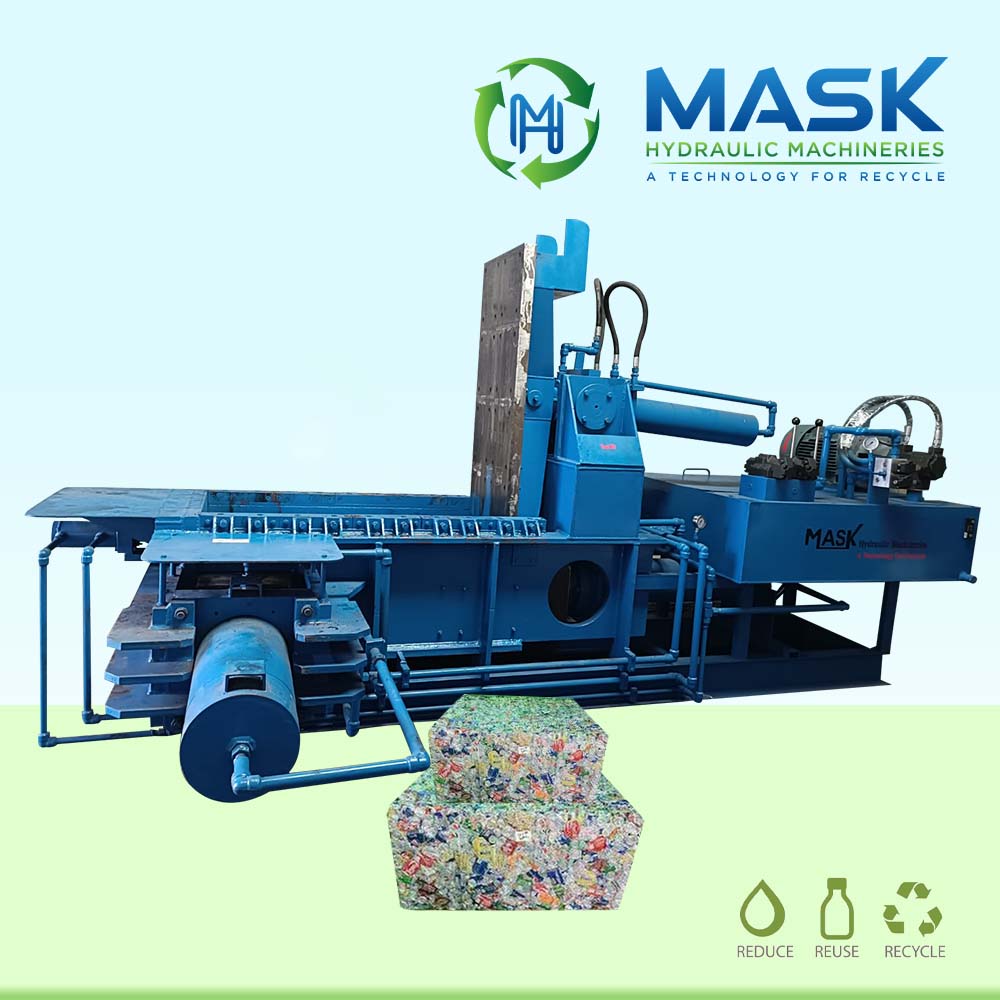
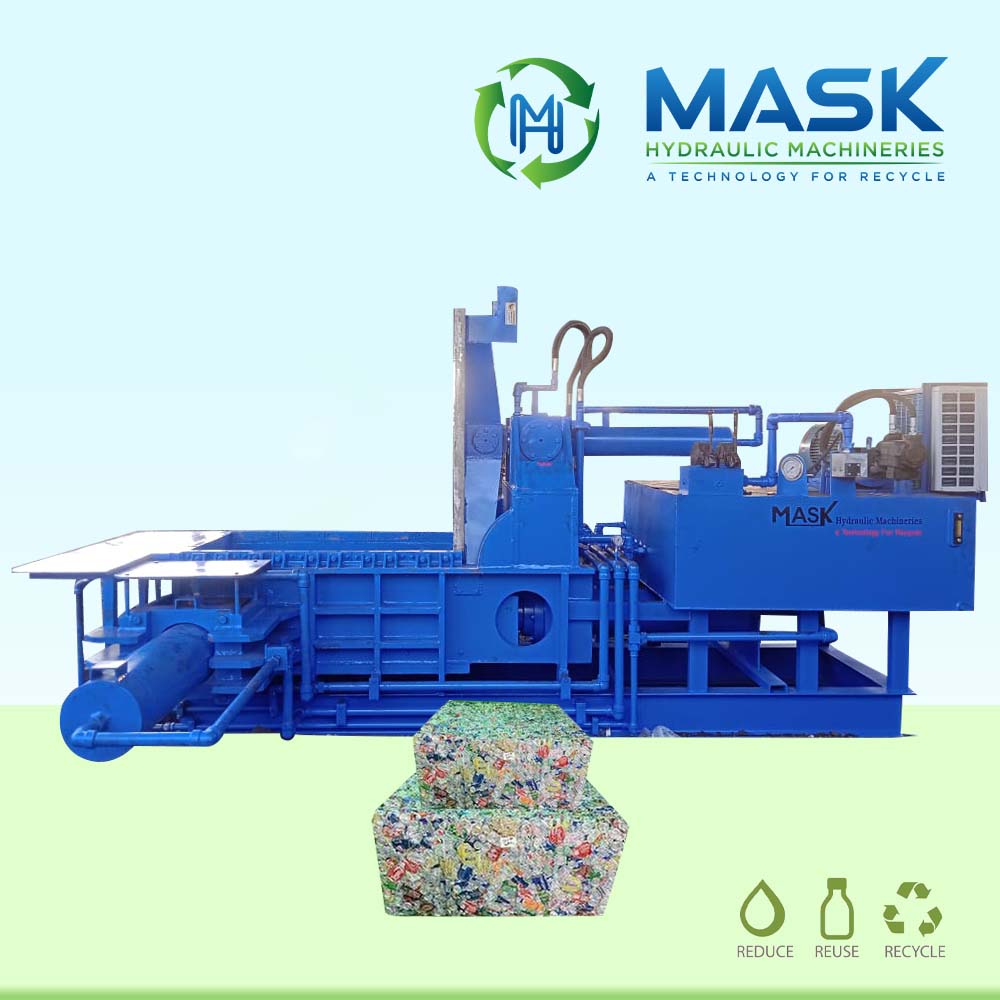
Highly Advanced Triple Compression Baler Top Ejection
The Triple Compression Baler Top Ejection metal scrap baling press machine typically compresses light scrap metal such as waste cans and tins, stainless steel scrap, copper scrap, various metal shavings, waste aluminum profiles, aluminum chips, non-ferrous metal scrap, and so on.
Triple Compression Baler Top Ejection Metal Scrap Baling Press Machine is mainly used in steel manufacturers and many waste disposal recycling centers. This machine is composed of three sections: hydraulic system, electrical system, mainframe, automatic PLC control or manual control, which is a more optional choice for you, and it can compress many materials such as metal scrap, aluminum scrap, stainless scrap, copper scrap, all kinds of ferrous and non-ferrous metals, and so on.
Working Principle Triple Compression Baler Top Ejection Metal Scrap Baling Press
The metal scrap is placed in the box chamber using a grabber or other tools. Then, the lid of the baler machine is closed, and the side cylinder presses the scrap metal to the limit of the side cylinder. Then, the main cylinder begins to press the scrap to the limit of the non-ferrous metal baling press machine, and the lid cylinder opens. After that, the top-ejection cylinder lifts the bundle upwards, and finally, every cylinder returns to its initial position, and the baling cycle is finished.
Applications of Triple Compression Baler Top Ejection Metal Scrap Baling Press Machine
Default description
Default description
Default description
Default description
Default description
Default description
Default description
Advantages of Triple Compression Baler Top Ejection Metal Scrap Baling Press
1. This machine adopts the Top Ejection type to Lift the Bundle Upwards.
2. It is simple to operate and maintain, saving stock and labor costs, transportation costs, and space.
3. Automatic PLC control with remote and manual control, two methods of control for your convenience, easy to use and maintain.
4.The inner wear plate adopts a well-known international brand of NM450 that is both durable and trustworthy, and Hardox450 is optional.
5. Output capacity ranges from 500 to 5000 kg per hour, giving you more alternatives.
6.Output capacity ranges from 500 to 5000 kg per hour, giving you more alternatives.
7.Bale size and weight can be modified to meet your specific needs.
8.Uses German Hydraulic technology to ensure the equipment runs smoothly and consistently.
9.Adopts an international well-known brand of hydraulic pump and valves.
10.It's an affordable, economical choice for your business.
Product Gallery
Parameters
Model
Box Size (cm)
Bale Size
Bale Weight (kg)
Power (HP)
ECONOMY 6
45x18x16
6x6
20-25
20
ECONOMY 8
55x20x18
8x8
25-30
30
ECONOMY 10
55x22x20
10x10
30-35
30
ECONOMY 12
55x22x22
12x12
35-40
30
ECONOMY 14
55x24x22
14x14
45-50
30
ECONOMY 15
55x30x24
15x15
50-80
30
ECONOMY 16
60x30x25
16x16
60-85
30
ECONOMY 18
60x30x25
18x18
75-90
30
Frequently Asked Questions
What makes the Triple Action Baler Top Ejection different from a double action baler?
A third cylinder. Compression happens in two stages — the side cylinder presses first, then the main cylinder presses further — before the lid opens and a dedicated top-ejection cylinder lifts the finished bundle out. That extra stage is what “triple action” actually refers to.
What materials does the Triple Action Baler Top Ejection compress?
Light scrap metal, largely — waste cans and tins, stainless steel scrap, copper scrap, metal shavings, aluminum profiles and chips, non-ferrous metal scrap in general, with ferrous mixes handled too. Steel manufacturers and waste disposal recycling centers are where it’s most commonly deployed.
Can you walk through the working principle of the Triple Action Baler Top Ejection?
Scrap enters the box chamber via grabber; the lid closes. Side cylinder presses first — then the main cylinder takes over, compressing further. Lid opens, the top-ejection cylinder lifts the bale upward, and every cylinder resets, ready to start again.
Does the Triple Action Baler Top Ejection support both automatic and manual control?
It does—automatic PLC control with remote operation comes standard, though manual control is available as an option too. Facilities can pick whichever mode fits their staffing and oversight preferences, rather than being locked into just one running style.
What is the output capacity of the Triple Action Baler Top Ejection?
500 to 5000 kg per hour, spread across the eight-model lineup. Smaller ECONOMY units near the bottom suit lighter, steadier feed rates; the larger configurations toward ECONOMY 18 are built for heavier daily tonnage without a drop in cycle speed.
How many models are available, and what changes between them?
Eight—ECONOMY 6 through ECONOMY 18. Bale weight climbs from 20–25 KG on the smallest unit to 75–90 KG on the largest; power requirement moves from 20 HP at the entry point up to 30 HP for most of the mid-to-large models.
What inner wear plate does the Triple Action Baler Top Ejection use?
NM450, a well-known international-brand material, comes standard for durability under repeated pressing. Hardox450 is offered as an optional upgrade — worth asking about specifically if your operation runs a high number of cycles through the chamber each day.
Can bale size and weight be customized on the Triple Action Baler Top Ejection?
Yes, both can be adjusted to match your requirements. As per storage space, transport limits, or a buyer’s bale-weight specification, it’s best to share your target figures at enquiry stage so the right configuration gets set from the outset.
Is the Triple Action Baler Top Ejection a cost-effective option?
The manufacturer positions it as an affordable, economical choice within the lineup. German hydraulic technology plus an internationally recognized pump-and-valve brand keep running costs down over time, without trading away the build quality the two-stage compression relies on.
What applications is the Triple Action Baler Top Ejection best suited for?
Aluminum UBC cans and tins, aluminum wire scrap, copper wire and pipe scrap, light scrap metal, mixed aluminum scrap, rebar and waste steel wire, stainless steel scrap — a fairly wide spread, covering most of what a metal-recycling operation would send through daily.


 Call Now: +91-88491-71589