A Leading Global Manufacturer Of Recycling Machinery.

Call Us At +918849171589

Address
Ahmedabad, Gujarat(India)

Email Address: info@maskhydraulics.com

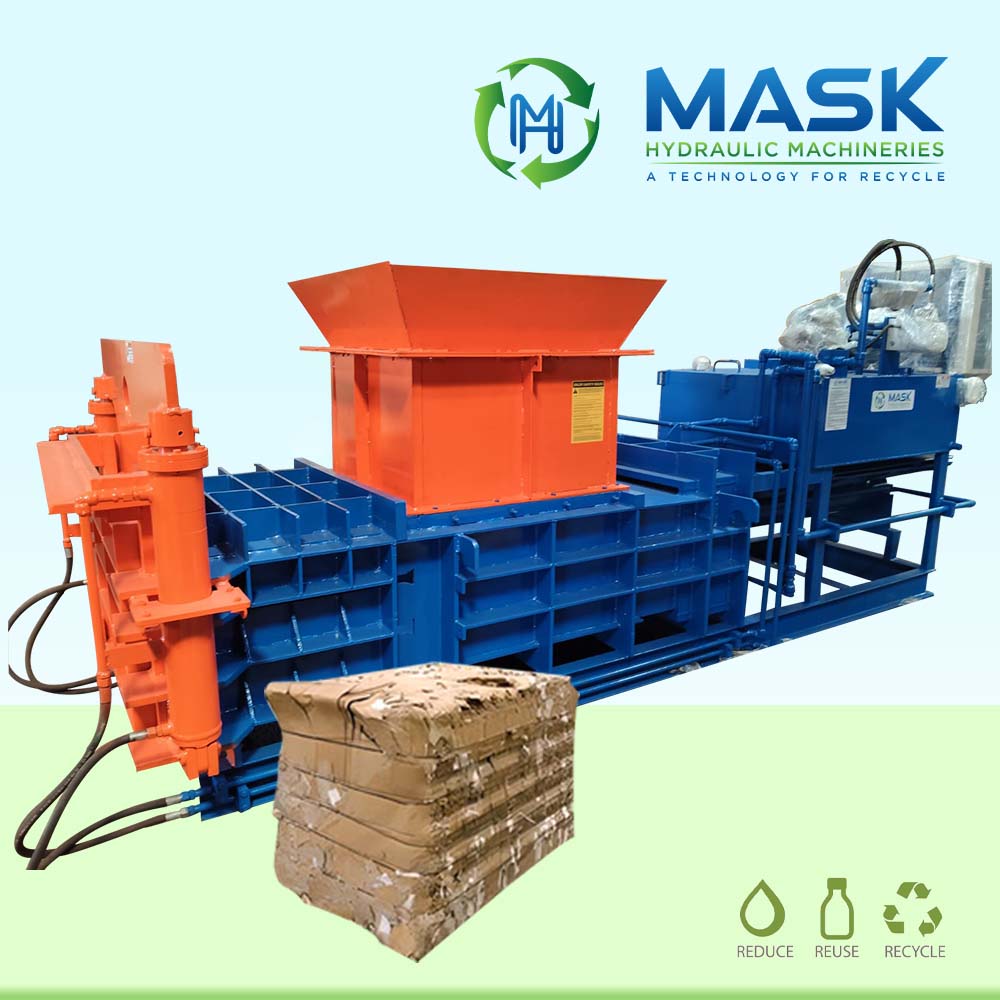
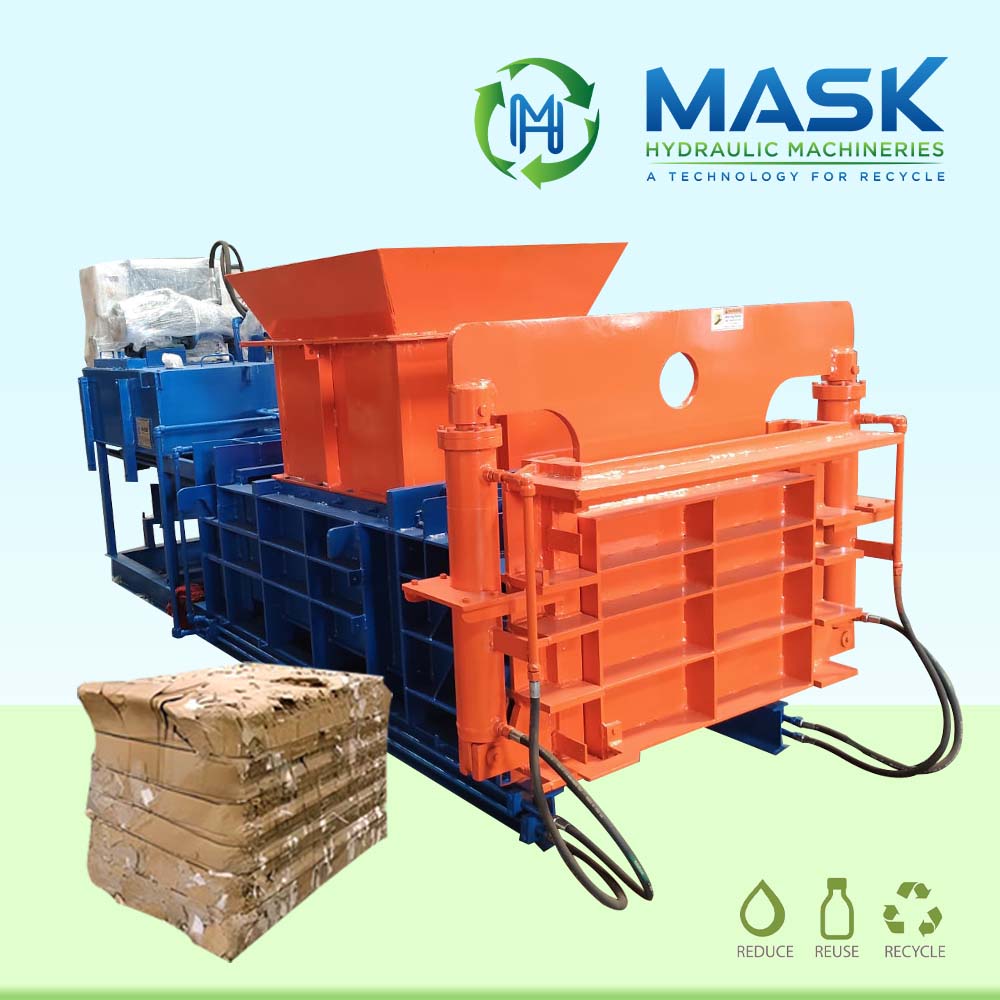
Semi Automatic Manual Tie Horizontal Baler

  • Home
  • Semi Automatic Manual Tie Horizontal Baler
Semi Automatic Manual Tie Horizontal Baler 4

Offering Excellent Quality Semi-Automatic Manual Door Horizontal Baler

One of MASK's most popular down-stroke balers is a standard mill-size baler machine MASK Semi-Automatic Horizontal Baling Press Machine is mostly used to compress waste cardboard boxes, OCC, ONP, carton boxes, plastic scrap, PET bottles, plastic films, paper shredding, paper trimmings, hay straw, and so on. The Semi-Automatic Horizontal Baling Press Machine is primarily used in cardboard paper manufacturers and many waste disposal recycling centers. This machine is made up of three sections: a hydraulic system, an electrical system, and a main frame. It can handle all types of paper scrap, including paper shredding, paper trimming, waste cardboard, OCC, ONP, and so on.
ne. These mill-size cardboard balers are stand-alone vertical baling machines. It is very useful in the disposal of cardboard/cartons. As a result, it is also known as a cardboard baler or carton baler. They are hydraulic mill-size balers that are perfect for waste recycling facilities, cardboard/paper production units, supermarkets, department shops, grocery stores, drug stores, printing facilities, and other businesses that generate immense quantities of waste cardboard/paper. This mill-size baler serves multiple purposes. It is also excellent for compacting other types of waste that are generated daily, such as scrap paper and polystyrene packing, for convenient storage until disposal.

LOOKING FOR Bailing Machineries Manufacturers, Suppliers

A Technology For Recycle

Contact Us

telephoneCall Now: +91-88491-71589

MASK Hydraulic Machineries logo w

Working Principle of Semi-Automatic Manual Door Horizontal Baler

The paper scrap is put into the box chamber by people or conveyor, then the main cylinder presses the paper scrap and other scraps to the limit several times which is set in our factory. Then the man bundles the bale by hand with steel wire or other ropes, then the side opening door is opened manually, then the bale is pushed out continuously by the main cylinder. This way, the bale is finished, and then starts the next bale continuously.

SEMI AUOTMATIC MANUAL TIE HORIZONTAL BALER 2 jpg 1
SEMI AUOTMATIC MANUAL TIE HORIZONTAL BALER 3 jpg 1

Application of Semi-Automatic Manual Door Horizontal Baler

Advantages of Semi-Automatic Manual Door Horizontal Baler

SEMI AUOTMATIC MANUAL TIE HORIZONTAL BALER 4 jpg 2
1. Semi-automatic horizontal push-out type, horizontal structure, sturdy and long-lasting.
2. Bundle the bale manually by humans, used in small and medium-sized recycling centers.
3. Bale size, weight, and length can all be adjusted to meet your needs.
4.The output capacity ranges from 2 to 8 tons per hour, giving you more alternatives.
5.Uses German Hydraulic technology to ensure that the equipment runs smoothly
6.Uses world-brand hydraulic pumps and valves that are dependable and steady for your business.
7.It's an outstanding baling press machine for your great organization because it's a low-cost, cost-effective solution.

Gallery

Parameters

Model Bale Size (MM) Bale Weight (KG) Power (HP)
MTHB 400 MD 700 X 500 150 – 200 KG 10 HP
MTHB 500 MD 750 X 500 200 – 250 KG 12.5 HP
MTHB 600 MD 800 X 650 250 – 330 KG 15 HP
MTHB 650 MD 900 X 660 330 – 400 KG 20 HP
MTHB 850 MD 1000 X 750 400 – 500 KG 25 HP
MTHB 1000 MD 1100 X 800 500 – 600 KG 30 HP
MTHB 1250 MD 1100 X 1000 650 – 850 KG 40 HP
MTHB 1600 MD 1250 X 1100 850 – 1100 KG 50 HP

Frequently Asked Questions

What materials does the Semi Automatic Manual Tie Horizontal Baler compress?
Waste cardboard boxes, OCC, ONP, plastic scrap, PET bottles, plastic films, paper shredding and trimmings, and hay straw—a fairly broad list for a machine at this price point. Small and medium recyclers dealing in a mix of these will generally find it covers what comes through the door.
Compression is hydraulic, but tying is not. Once the cylinder presses the scrap to its set limit, an operator bundles the bale by hand using steel wire or rope, opens the side door manually, and the bale is then pushed out by the cylinder before the cycle repeats.
Between 2 and 8 tons per hour, depending on the model chosen from the range. That’s lower than the fully automatic line, naturally enough, given the manual tying step in between cycles—fine for operations that aren’t chasing round-the-clock throughput.
Eight, running MTHB 400 MD through MTHB 1600 MD. Bale weight starts at 150–200 KG and climbs to 850–1100 KG at the top end; power requirement scales alongside, from 10 HP on the smallest unit up to 50 HP on the largest.
Bale size, weight, and length can all be set to match what your operation needs. As per your storage and transport constraints, this is worth discussing at the enquiry stage—the machine accommodates a fair range once configured.
Scrap goes into the box chamber by hand or conveyor. The main cylinder compresses it repeatedly to a factory-set limit; a person then wires or ropes the bale together, opens the door, and the cylinder ejects it. Then the next bale starts. Simple and dependent on a person being present at each step.
Yes, tying and door-opening are manual steps, so an operator needs to be at the machine for each bale cycle. That’s the trade-off for the lower upfront cost; facilities baling smaller daily volumes tend to find the added labor manageable.
It varies quite a bit across the range: 10 HP for the MTHB 400 MD, rising to 50 HP for the MTHB 1600 MD. Mid-sized units like the MTHB 850 MD and MTHB 1000 MD sit at 25 HP and 30 HP respectively — kindly refer to the parameter table for the exact figure per model.
German hydraulic technology, paired with world-brand pumps and valves, keeps the system running steadily. Nothing exotic here, but dependable, which matters more for a machine expected to run for years with fewer automated parts to service in the first place.
Small and medium-sized recycling centers, mainly, along with cardboard/paper units, supermarkets, and printing facilities generating steady but moderate waste volumes. It’s a cost-effective, low-maintenance entry point for facilities not yet ready to invest in a fully automatic auto-tie machine.
error: Content is protected !!