

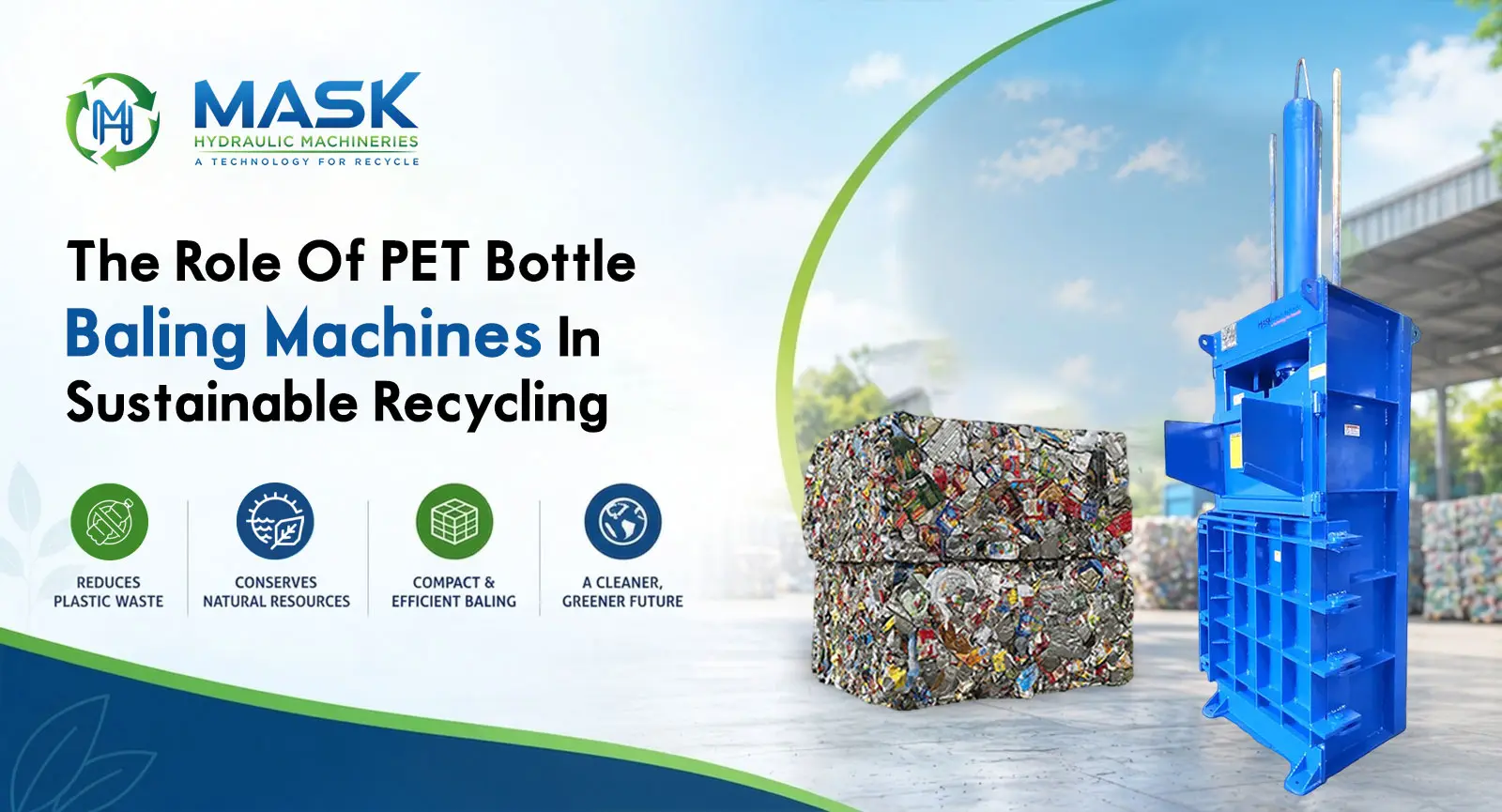
Quick Summary: A PET bottle baling machine takes the bulk of loose plastic waste and turns it into dense, stackable bales that are worth moving. This article covers how the machines work, the different types on the market, the things that matter before you buy one, how to judge a machine manufacturer, the mistakes recyclers keep making, and the bigger environmental role these machines play.
Table of Contents
Introduction
Plastic recycling only works if the plastic gets collected, moved, and reprocessed, and that middle step, moving it, is where a lot of good intentions fall apart. Loose PET bottles are light but bulky, so a truck can fill up on space long before it fills up on weight, which makes transport expensive and inefficient. A PET bottle baling machine solves exactly that problem. It compresses loose bottles into dense, tightly tied bales using hydraulic pressure, so recyclers can move far more material in a single trip and store it safely until it reaches a reprocessing plant. That one step, turning scattered waste into something compact and easy to handle, is a big part of what keeps sustainable recycling economically viable. This article covers how these machines work, which type of machine is suitable for which operation, what things matter before buying one, how to judge PET Bottle Baling Machine Manufacturers, the common mistakes recyclers make, and the bigger role this equipment plays in keeping the recycling chain moving.
What Is a PET Bottle Baling Machine and How Does It Work?
A PET bottle baling machine pushes a hydraulic ram into a chamber full of loose bottles, compresses them into a solid block, and ties that block off with wire or strapping so it holds its shape once it’s out of the machine. The same core mechanism drives most plastic baling machine designs on the market, regardless of the specific waste stream they’re built for. The working of this machine is like:
- The pressure builds gradually rather than slamming down all at once, which is why bales come out uniform instead of lopsided or half-crushed.
- Depending on the tonnage and the bottle type going in, most machines land somewhere around 350 to 450 kg per cubic metre once compressed.
- Once tied, the bale gets pushed out and the chamber’s ready for the next load.
What separates a decent machine from a great one comes down to how consistently it hits that density cycle after cycle, and how long the ram and press heads hold up under daily use without needing constant repair.
Why PET Bottle Baling Machines Matter for Sustainable Recycling
Recycling is of financial use if the numbers work, and this is exactly where a baler is useful. These machines are useful because:
- Dense bales mean trucks carry far more weight per trip, so transport costs drop noticeably instead of trucks hauling mostly air.
- Baled plastic stays drier and cleaner than a pile of loose bottles placed outdoors, which cuts down on pest problems and reduces fire risk in bigger facilities.
- Plants further down the chain, the ones shredding and reprocessing PET bottle baling machine, want baled material because it feeds through their systems predictably instead of in unpredictable clumps.
- Needing less floor space for storage means a facility can handle more volume without buying more land, which matters a lot once you’re anywhere near a city.
A yard running a decent plastic baling machine can often push through two or three times the volume of one still relying on manual compression, or none at all.
Types of PET Bottle Baling Machines
Picking the wrong type of machine is probably the single most common way recyclers either overspend or end up six months later. Different types of machines are:
- Vertical balers push material down from the top using one ram. Smaller footprint, lower cost, and generally enough for anyone processing 1 to 5 tonnes an hour.
- Horizontal balers take a continuous feed through a side-loading chamber and are built for volume, often running 7 to 14 tonnes an hour.
- Semi-automatic PET bottle baling machines still need someone loading and tying manually, so labour cost stays part of the equation, but the machine itself costs less.
- Fully automatic machines handle loading, pressing, and tying with barely any manual input, which pays off once volume is high enough to justify it.
If you’re just getting into this or running somewhere in the middle, a semi-automatic vertical baler tends to be more useful than jumping straight into a fully automatic horizontal setup that spends half its life underused. Most established PET Bottle Baling Machine Manufacturers will walk you through this choice rather than pushing whichever model is highest in their catalog.
Specifications That Matter Before You Buy
Most first-time buyers zero in on tonnage and stop there, but tonnage is just one line on a much longer list. The following are the things that one should check before they buy this machine:
- Hydraulic power decides how much force the ram can apply, usually somewhere between 30 and 160 tons depending on the machine’s scale.
- Bale density and weight affect how smoothly material moves once it leaves your facility, since heavier bales mean fewer trips and fewer bales to handle per tonne.
- Cycle time is simply how fast a full chamber gets compressed and ejected on a PET Bottle Baling Machine, and it adds up fast across a working day.
- Feed opening size needs to match what you’re feeding in. A mismatched opening slows loading down more than people expect.
- Automation level should match your actual labour situation on the ground, not whatever sounds most impressive on a brochure.
Get any of these wrong, and the machine won’t fail on day one. It just becomes the problem nobody accounted for, usually a few months in.
Mistakes Recyclers Make With PET Bottle Baling Machine
Even solid equipment underperforms when a few avoidable mistakes sneak in. Some of the most common mistakes are as follows:
- Buying a machine sized for growth that hasn’t happened yet, so capacity is mostly unused for years.
- Putting off routine hydraulic maintenance, which shortens the machine’s working life and makes unplanned downtime more likely.
- Not dealing with contamination, caps, labels, and liquid residue lowers bale quality and wears down components faster than expected.
- Choosing purely on price without checking the build quality of the ram and press heads, since those are the parts that fail first under daily pressure.
Choosing purely on price without checking the build quality of the ram and press heads, since those are the parts that fail first under daily pressure. That’s why it usually pays off to compare a few PET Bottle Baling Machine Manufacturers instead of settling for the first one you talk to.
Conclusion
A PET bottle baling machine rarely gets the credit it deserves, yet it is the important step that decides whether a recycling operation stays profitable or keeps losing money on wasted space and half-empty trucks. Getting the tonnage, type, and manufacturer right from day one saves years of avoidable trouble later. Mask Hydraulic Machineries builds every machine around that reality, engineering rugged balers that match how recyclers actually work on the ground, not just how it looks in a product listing.
FAQs
Is a PET bottle baling machine worth it for a small recycling business, or is it overkill?
For most operations moving even a few hundred kilos of PET a week, it pays for itself faster than people expect. The savings show up mostly in transport, since you’re no longer paying to haul mostly empty truck space.
Vertical or horizontal baler: which one should I actually go with?
This completely depends on volume. If you’re processing under 5 tonnes an hour, a vertical machine does the work well without overspending. Once you’re consistently pushing more than that, a horizontal baler stops being a luxury and starts being necessary.
How much does a PET bottle baling machine cut down on storage space?
More than most first-timers expect, usually somewhere around 80 percent less volume than loose bottles took up before. That’s the difference between renting extra warehouse space and not needing to.

Comments are closed