

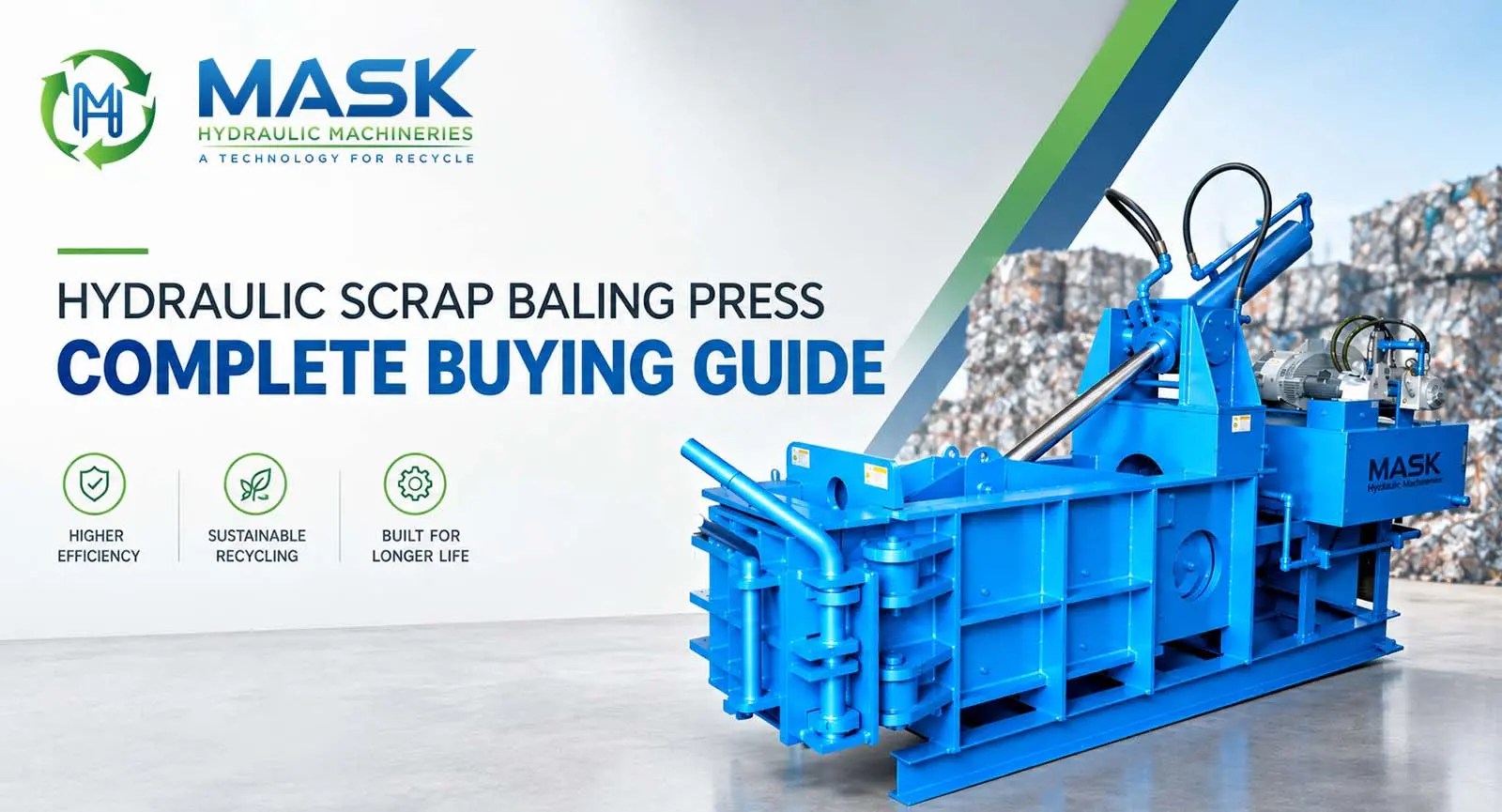
Quick Summary: If you are thinking of buying a hydraulic scrap baling press, then this article discusses what the machine does in detail, where these machines are used, and how to pick the right one for your industry or plant. You will learn how to match tonnage to your scrap, compare manual and automatic models, and avoid the mistakes buyers regret later.
Table of Contents
Introduction
Metal scrap piles up faster than most people expect. Turnings from the lathe, offcuts from fabrication, crushed car panels, aluminium trimmings: they all spread out and take a lot of floor space. A hydraulic scrap baling press fixes that. It squeezes loose metal inside a steel chamber with a hydraulic ram, then pushes out a dense, neat block called a bale. You will find these presses in scrap yards, auto dismantling units, machine shops, foundries, and recycling plants. Any site that throws off metal waste every day can put one to use. The benefits are easy to see. Bales take up far less room, load onto trucks faster, and carry more weight per trip. Furnaces melt them evenly, so buyers often pay better rates. The yard also looks cleaner and is safer to walk through.
How Does a Hydraulic Scrap Baling Press Work?
The working of this scrap baling press is very simple. A motor runs a pump; the pump pushes oil into a cylinder, and the cylinder drives a heavy steel ram into the scrap. Few parts are involved, which is why a well-built press can run for years. A typical working cycle of the hydraulic scrap baling press has three steps:
- Loading: Workers drop scrap into the chamber by hand, grab, or conveyor.
- Compression: The ram moves forward until it reaches the set pressure.
- Ejection: The press pushes the bale out, and the ram returns.
Pump size sets the cycle speed. But if loading is slow, a fast pump doesn’t help much.
Manual, Semi-Automatic, and Fully Automatic Balers
Balers differ mostly in how much the operator has to do. Here is how the three types compare:
- Manual: The operator moves levers for every stroke. The price is low, the output is modest, and it suits small workshops.
- Semi-automatic: The operator loads the chamber and presses start, and the machine finishes the cycle. Most mid-size yards pick this one.
- Fully automatic: PLC controls run everything, often with a conveyor feeding the chamber. It is more useful for plants running multiple shifts.
Think of it as paying more upfront for the hydraulic scrap baling press to save on labour later. If one worker spends half a shift on levers, the math changes quickly.
How to Choose the Right Scrap Baler
When choosing a scrap baler, technical specifications present a number of variables, but only a few key operational parameters directly tell how well the machine performs in your industry. Here are simple, industry-standard things to evaluate when selecting the right scrap baler for your processing needs:
1. Press Force
Tonnage decides how tight the bale gets. Aluminium and thin sheet bale on lighter presses, often rated 30 to 60 tons. Steel turnings and car shells need more, and heavy-duty hydraulic scrap baling press machines go past 100 tons. Too little force is the most expensive mistake, because mills reject loose bales.
2. Chamber and Bale Size
Ask your buyer which bale size they accept before you look at any machine. Then measure your longest scrap pieces. A chamber that takes them whole saves cutting time.
3. Output
A press rated for eight bales an hour might manage five once loading delays are counted. Compare the rating of the hydraulic scrap baling press machine with your daily tonnage, and leave room to grow.
4. Build Quality
Look closely at the cylinder, pump, valves, oil cooler, and wear liners. Thick, high-grade chamber steel holds up against constant abrasion.
5. Power and Service
Most industrial balers need three-phase power, so check your site’s capacity. Ask how fast the maker responds to breakdowns of the hydraulic scrap baling press and whether spares are in stock. A stopped baler stops the whole yard. Rate each machine on these five points, and your shortlist gets short fast.
6. The Case for Baled Scrap
Steel is among the most recycled materials in the world. Worldsteel puts the scrap used by steelmakers at roughly 630 million tonnes a year. Each tonne recycled saves about 1.5 tonnes of CO2 and 1.4 tonnes of iron ore. Mills want clean, dense feed, and bales give them that. For you as a seller, that means a stronger position when you negotiate rates.
Maintenance Tips to Follow for a Longer Press Life
Most hydraulic scrap baling press breakdowns don’t occur suddenly. They start as a slow leak, a warm pump, or a strange noise that someone ignored at the start. If you build a few small checks into the daily routine, your press will keep running, and your repair bills will stay low. Here is what to do:
- Look at the oil before every shift: Check the level and the temperature. Low oil forces the pump to work harder, and hot oil stops lubricating properly. It takes a minute, and it saves hours.
- Change the oil when the manufacturer says so: Dirty oil is what affects the performance of the pump and valves in the early stages. Stretching the interval to save a little money usually costs far more later.
- Replace filters on schedule: A clogged filter affects the working of the pump in the hydraulic scrap baling press. Don’t wait for the machine to complain.
- Check hoses and fittings for leaks: Wet patches, cracks, and swollen hoses are all warning signs. A small seep today can become a burst hose halfway through a busy shift.
- Grease the moving parts once a week: Pins, hinges, and guide rails take a beating. A few minutes with a grease gun slows the wear a lot.
- Inspect the chamber liners: Scrap grinds against the walls on every stroke. If the liners are thinning or cracked, replace them before the damage reaches the hydraulic scrap baling press.
- Pay attention to noise: A whine, a knock, or a jerky ram usually means air in the system, a tired pump, or low oil. Stop and find the cause instead of pushing through the shift.
- Keep the oil cooler clean: Dust and metal fines clog it easily, and hot oil shortens the life of everything it touches.
None of this is difficult or time-consuming work, but it is the cheapest insurance you can buy for your press. A few minutes of care each day costs far less than one lost production shift. Look after the machine, and it will keep earning for you year after year.
Common Mistakes Which Buyers Make While Selecting a Hydraulic Scrap Baling Press Machine
Most complaints we hear come from a few avoidable choices. Watch out for these:
- Choosing on price alone, then paying for it through downtime.
- Ignoring the material mix, so the press struggles with heavier scrap than planned.
- Skipping foundation work, which leads to vibration and oil leaks.
- Baling oily or wet scrap, which lowers the value of every bale.
- Running with no maintenance plan until the oil overheats.
A short site discussion with the manufacturer before you order clears up most of these.
Conclusion
Buying a hydraulic scrap baling press is easier when you start with your own scrap, your daily volume, and your buyer’s bale requirements. Get tonnage, chamber size, and build quality right, and handling costs drop while rates improve. Mask Hydraulic Machineries builds scrap baling machines for Indian recyclers and guides you from selection to installation. Visit our website to know the types of machines we have and share your requirements. The cheapest baler rarely turns out to be the best one. The one that keeps running every shift usually does.
FAQs
What is a hydraulic scrap baling press used for?
A hydraulic scrap baling press is used to compress loose metal such as steel turnings, aluminium, copper, and sheet offcuts into dense bales for easier storage, transport, and sale.
How much does a scrap baler cost in India?
The price of the scrap baler machine completely depends on tonnage, chamber size, and automation level. Share your material and daily volume with the manufacturer for an accurate quote.
How do I pick the right tonnage hydraulic scrap baling press machine?
The right tonnage is based on your hardest material. Then ask the manufacturer to confirm the force needed for your target bale density.
Should I buy a manual or automatic baler?
Manual suits low volumes and tight budgets. Move to semi-automatic or fully automatic as daily tonnage and labour costs rise.
How much space does a hydraulic scrap baling press save?
The space that the baling machine saves varies by material, but baling commonly cuts loose scrap volume by more than half.

Comments are closed