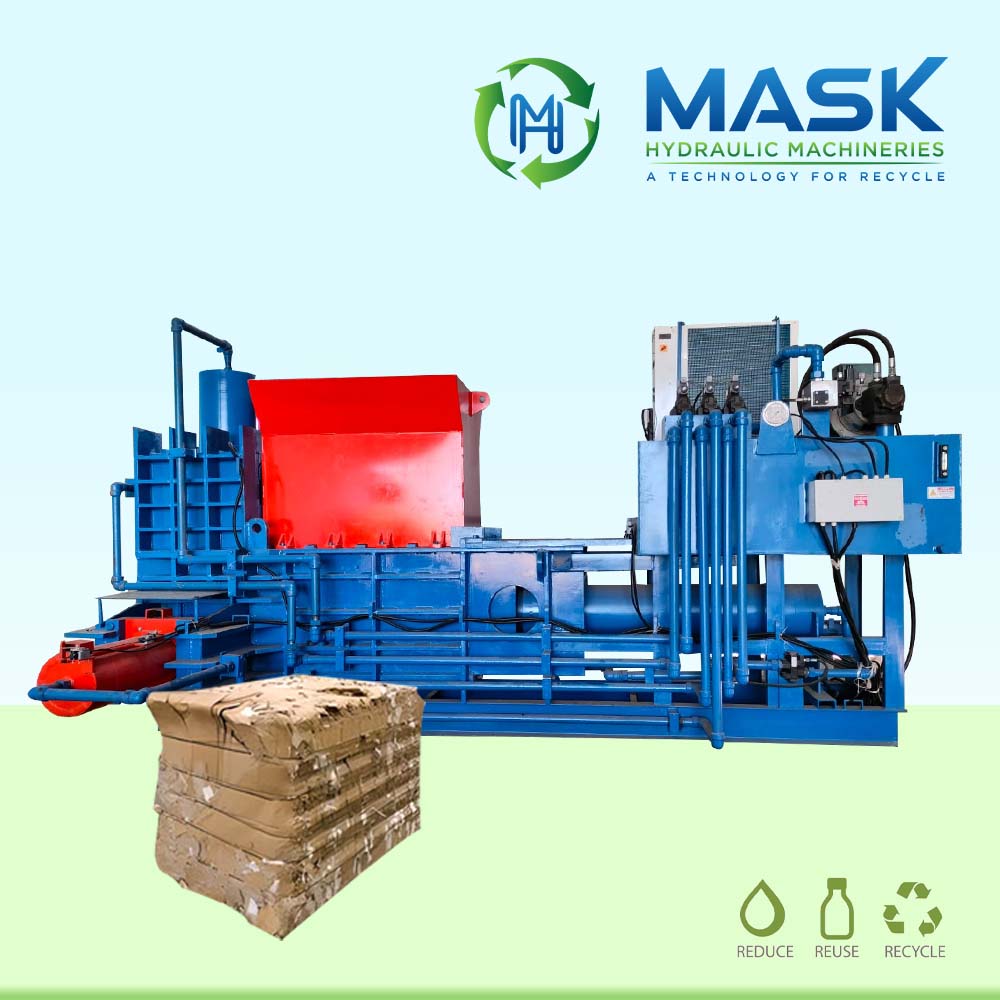
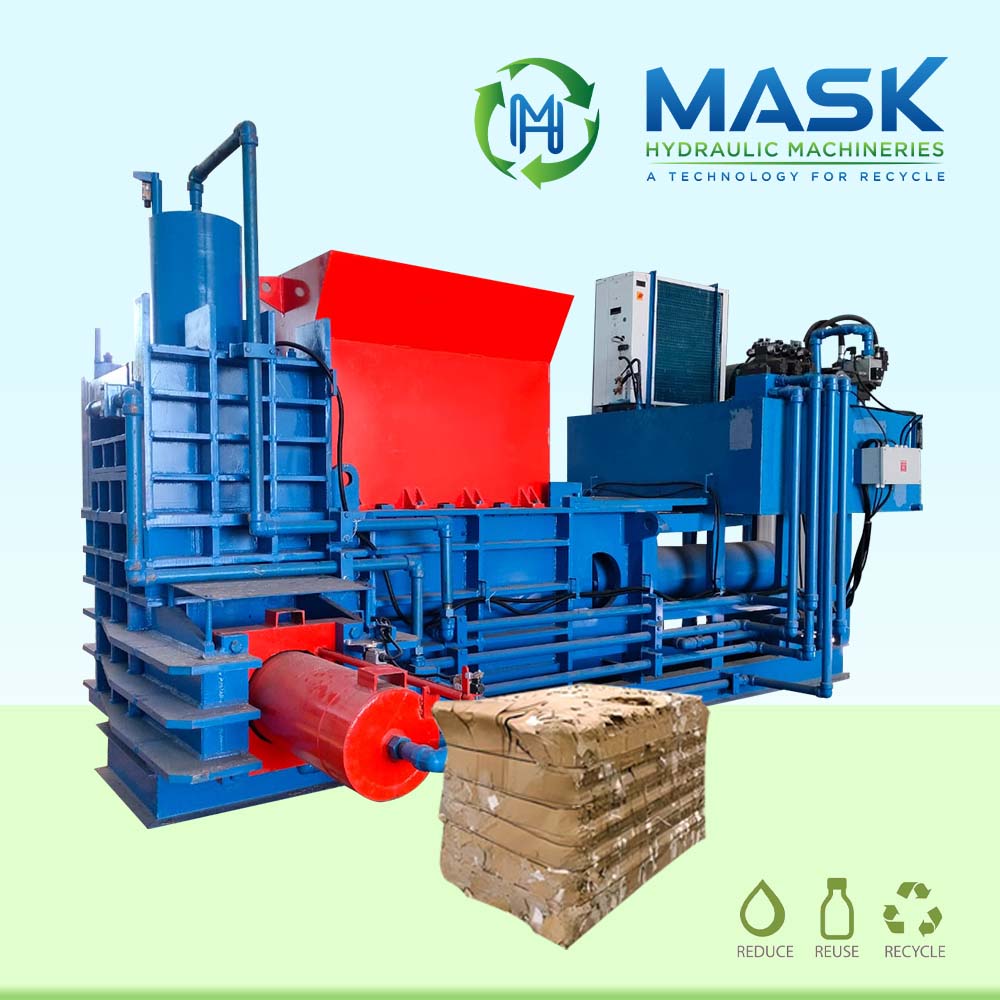
Baling machines, also known as baler machines, are used to compress scrap metal and waste material into dense blocks. Our baling machine can condense both ferrous and non-ferrous metals to increase scrap density. It minimizes storage and transportation costs and makes it simple to handle and charge in the furnace. We are the leading manufacturer of baling machines in India. Additionally, we are one of the leading bailing machine manufacturers in India, and our multi purpose baling machine can treat any size of metal scrap, from small steel kitchenware to large, bulky automobiles. To create long-lasting and strong balers, we use high-quality materials. We are the leading baling machine manufacturer in India providing high-quality machines that save you time and manual labor while lowering overall operational expenses.
Mask Hydraulic Machineries deliver balers based on our customers' specific metal scrap management requirements. Every component is considered, including the type of scrap, the quantity to be baled, and the desired productivity. We service a diverse range of clients, including scrap yards, rolling mills, furnaces and melting units, and larger manufacturing plants that create metal trash. We promise the greatest results with our baling machine for plastic, steel, copper, zinc, iron, stainless steel, MS, aluminum, or any other metal alloy. All of our products are made by our professionals as per the industry norms. Moreover, if you want to buy this machine or need further information about our products then you may contact us!
1. These machines are excellent for recycling steel.
2. They are used in the recycling of cardboard and paper.
3. Plastic recycling is also done with baler machines.
4. Baling machines can assist in compressing foam trash to save space.
5. In agriculture, these machines are used to condense animal feed.
Product Gallery
Frequently Asked Questions
How does a baling machine turn loose scrap into compact blocks?
Scrap goes into the chamber, and hydraulic force presses it down into a dense block, whether that’s steel, cardboard, or plastic. Once compacted, the material takes up a fraction of the space it did loose, which is really the whole point of baling in the first place.
Is one baling machine enough for both metal scrap and materials like cardboard or plastic?
Not always, no. Some machines are built specifically around metal, scrap yards and rolling mills tend to go this route, while others are configured for paper, cardboard, or plastic waste. Tell us your primary material and we’ll point you to the right configuration.
What size range of scrap can go through a baling machine?
Quite a wide one, from small steel kitchenware right up to an entire automobile. The machine doesn’t really care about shape or bulk within reason; it’s built to handle whatever a scrap yard or manufacturing plant is likely to feed into it.
Why do baling machines use PLC control instead of manual operation?
Repeatability, mostly. A PLC-controlled cycle runs the same way each time it’s triggered, so output stays consistent regardless of who’s operating it that day. Manual operation leaves more room for variation, and at scale, that variation adds up.
What's the purpose of the lubrication system fitted to these machines?
Wear and tear, that’s what it’s fighting against. Daily compression cycles put real stress on moving parts, and a proper lubrication system is what keeps that stress from shortening the machine’s working life.
Do baling machines only work with recyclable waste, or are there other uses too?
Recycling is the bigger use case, steel, cardboard, paper, plastic, but it’s not the only one. Foam trash compaction is another common application, and in agriculture, the same compression principle gets used to condense animal feed.
Who typically buys a baling machine, scrap dealers or manufacturers, or both?
Both, actually. Scrap yards are a natural fit, but rolling mills, furnaces, melting units, and manufacturing plants that generate their own metal waste buy these too, usually to manage their own scrap rather than deal with a third party.
Can a baling machine be built around a specific scrap type or production target?
Yes, and this is generally how orders get placed. The type of scrap, the volume you’re processing, and the output you’re aiming for all shape the final configuration, so it’s rarely a case of picking off a fixed shelf.
What's the real cost benefit of baling scrap before storing or transporting it?
Space and freight, mainly. Baled material takes up far less room in the yard, and fewer, fuller truckloads mean lower transportation costs overall. Loading and unloading also gets easier once the scrap isn’t loose and unwieldy.
How much upkeep does a baling machine need to keep running smoothly?
Fairly little, as long as the lubrication system is maintained and the hydraulics get checked from time to time. The robust build these machines come with means most of what’s needed is routine attention rather than anything more involved.


 Call Now: +91-88491-71589