

Why This Question Keeps Coming Up?
What a Baling Machine Does?
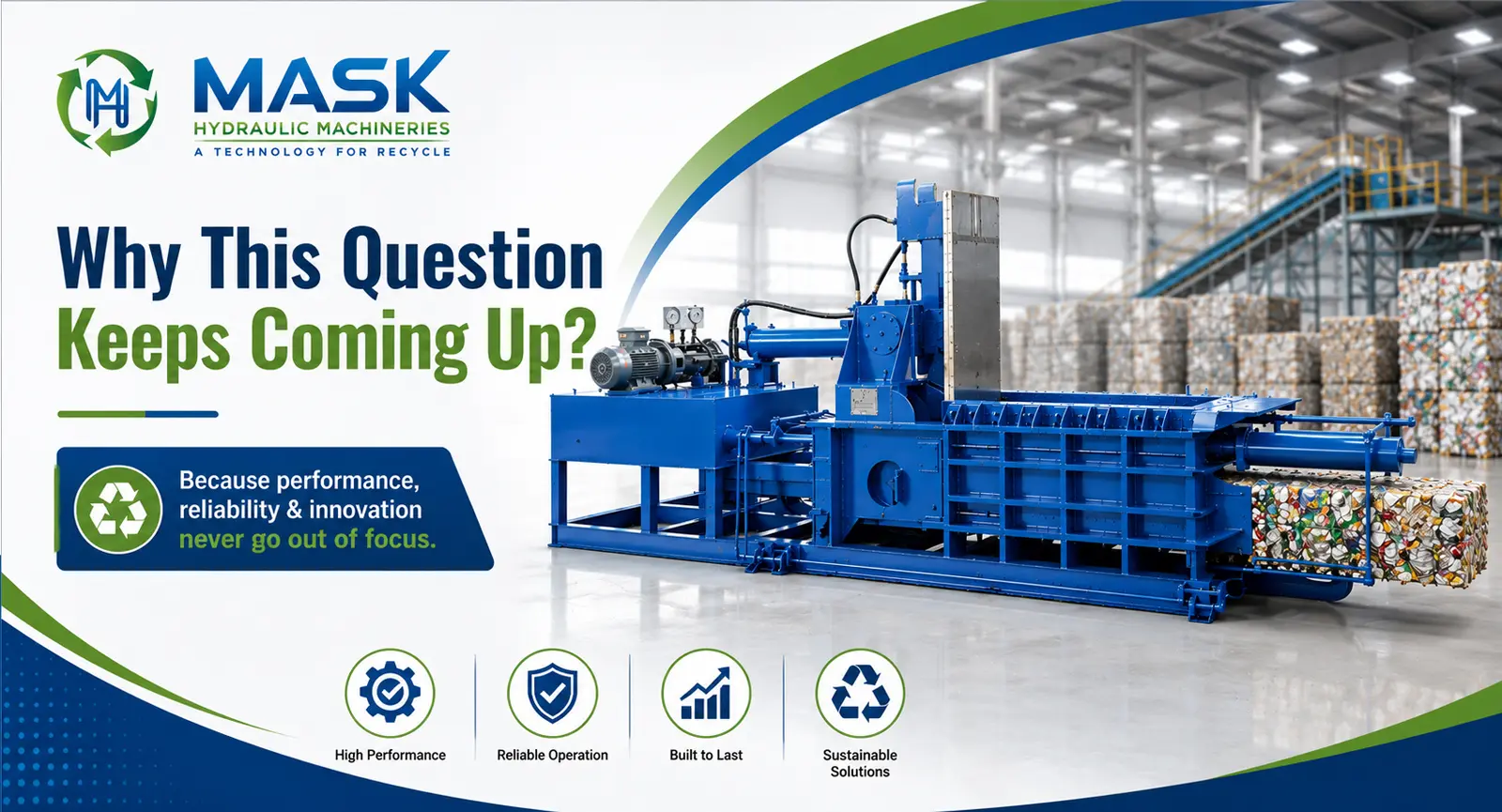
A baling machine takes loose recyclable material, cardboard, paper, plastics, and metal scrap baling machine and compresses it into dense, tightly bound bales using a hydraulic ram. Once the material is compressed to size, it gets tied off with wire or strapping and pushed out of the machine, ready for storage, transport, or sale to a recycler. Balers generally come in two configurations:
- Vertical balers, which compress material downward and are suited to smaller to medium operations.
- Horizontal balers, built for higher volumes with continuous feeding, are common in larger recycling facilities.
The whole point of baling is space and logistics. A loose cardboard or metal scrap baling machine takes up a huge amount of space and costs more to transport. A baled version of the same material takes up a fraction of the space and is far easier to move, store, and sell.
Where the Two Machines Overlap?
Here’s where people get confused: both machines reduce volume. That’s true. But they do it in completely different ways.
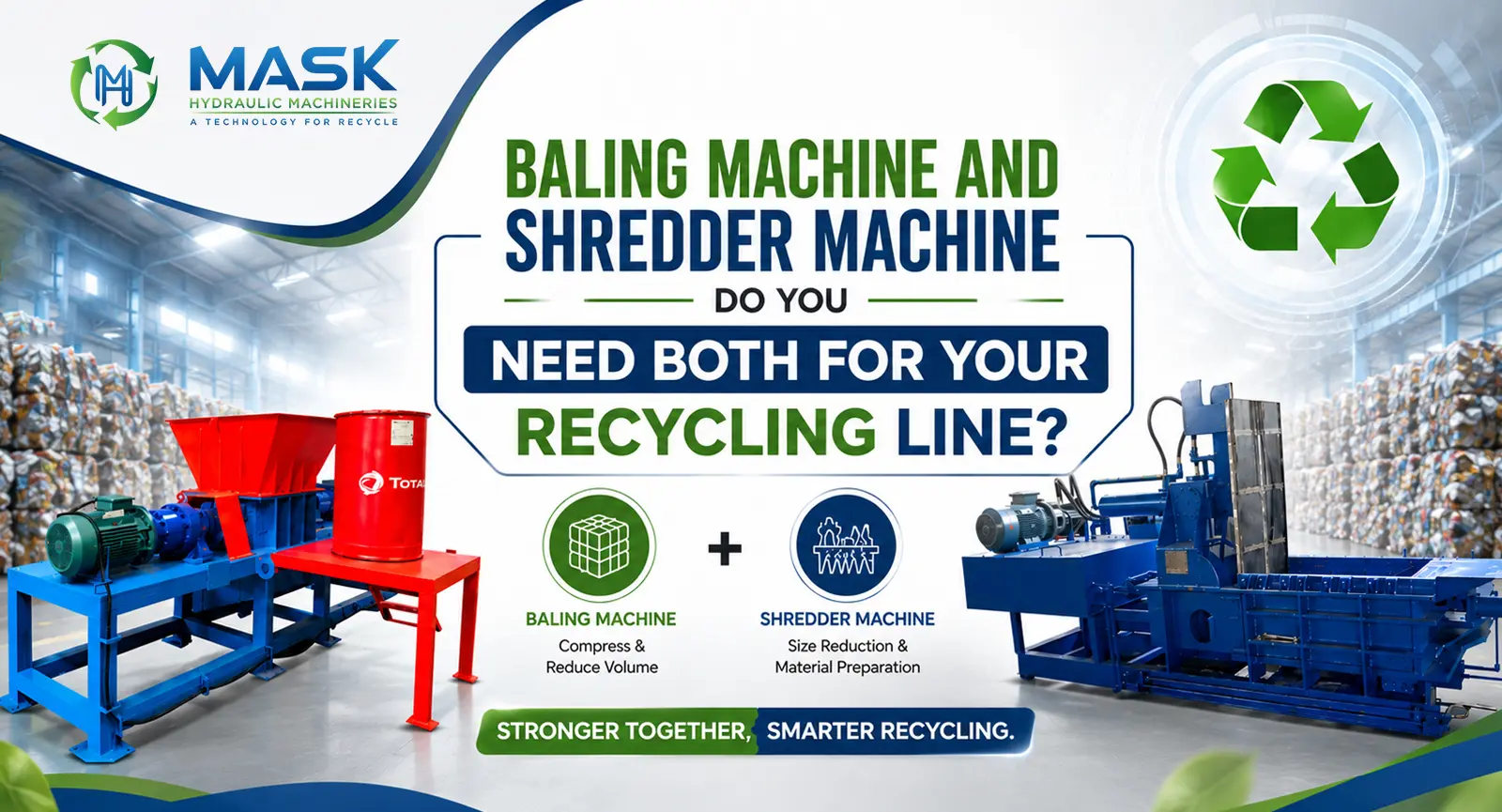
A baling machine compresses material that’s already a manageable size. A shredder changes the shape and size of the material before compression happens. One deals with density, the other deals with dimension.
If your material already comes in a workable size, think flattened cardboard boxes or loose paper, you often don’t need a shredder at all. The baler can handle it on its own.
When a Baling Machine Alone Is Enough?
For a lot of operations, a standalone baling machine covers everything they need. This usually applies if:
- Your material is already flat or loosely sized, like cardboard, paper, or soft plastics
- You’re not dealing with bulky or irregularly shaped scrap
- Your volume is moderate rather than continuous industrial-scale output
Plenty of retail stores, warehouses, and smaller manufacturing units run entirely on a vertical or horizontal baler without ever needing a shredder in the mix. There’s no point adding a machine to your line that your material simply doesn’t call for.
What Happens If You Skip the Shredder When You Actually Need One?
If your material calls for shredding and you skip that step, a few things tend to happen. The baler works harder than it should, which adds wear over time. Bales come out less dense and less uniform, which recyclers don’t pay as well for. And irregular material can jam or slow down the baling cycle altogether.
None of this means you need a shredder by default. It just means the decision should be based on what you’re actually processing, not on assuming more equipment is always better.
Things Worth Thinking About Before You Buy
Before deciding whether your line needs a baling machine, a shredder, or both, it helps to look at a few practical points:
- What type of material are you generating most, and how consistent is its size?
- What’s your daily or weekly volume?
- Is space a constraint, since shredders and balers both need floor room?
- Are you dealing with sensitive documents that need to be destroyed, not just compacted?
- What’s your budget, both for the initial purchase and ongoing maintenance?
Mask Hydraulic Machinery builds a full range of both vertical and horizontal balers, metal scrap baling machines, waste paper baling machines, double shaft and heavy-duty shredders, and can help match the right combination to your material and volume rather than a generic setup.
Conclusion
A Baling Machine makes recycling cleaner, faster, and much easier to manage. A shredder helps prepare bulky material before it reaches the baling stage. Often, it is contingent upon the type of waste, available space, and how smooth they want the process to be, whether businesses use both. The best setup is one that works in your regular work without creating any problems. For reliable recycling solutions and practical machine support, many businesses look to Mask Hydraulic Machineries for trusted, long-term value.
FAQs

Mask Hydraulic Machiners
Mask Hydraulic Machineries, based in Ahmedabad, Gujarat, is a trusted leader in the manufacturing and supply of high-performance baling equipments.