

A Leading Global Manufacturer Of Recycling Machinery.
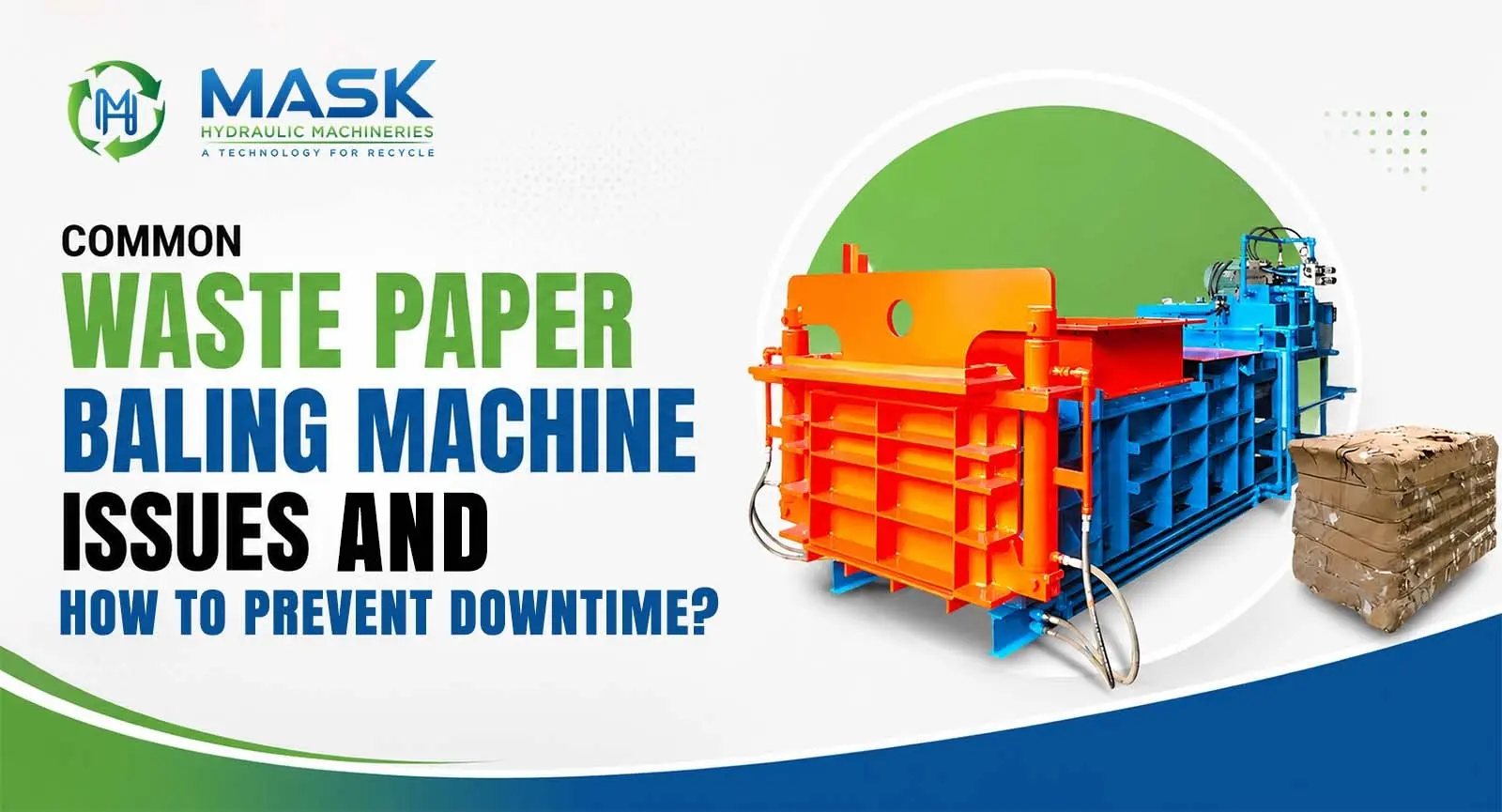
Managing a recycling plant, a large retail warehouse, or a busy printing press means dealing with large amounts of scrap paper every single day. Loose paper takes up massive amounts of floor space, creates a major fire hazard, and makes transportation incredibly expensive. To handle this mess, most modern facilities rely on a heavy-duty waste paper baling machine to squash loose sheets, cardboard boxes, and trimmings into tight, stackable blocks.
But because these recycling machines operate under immense hydraulic pressure on dusty factory floors, they face constant strain. When a baler breaks down out of nowhere, your entire floor gets jammed with loose trash within hours, stopping production lines completely. For any business, unexpected downtime instantly drains profits.
Fortunately, most common machinery breakdowns are highly predictable. Let us look at why these recycling units act up and how you can prevent sudden failures to keep your plant running smoothly.
It sounds strange that soft paper can damage a machine made of heavy steel, but fine paper debris is actually highly destructive over time.
Slicing, shredding, and crushing paper releases thousands of microscopic fibers into the air. This fine dust settles into electrical panels, coats the hydraulic pumps, and gets trapped inside cooling fans, causing the entire system to run dangerously hot.
When fine paper dust slips past old rubber seals and enters the hydraulic oil tank, it turns the smooth oil into a gritty, abrasive sludge that slowly destroys internal valves.
If your waste paper baling machine operators know what warning signs to look for, they can catch small glitches before they turn into expensive engineering repair bills.
If the main crushing plate takes way too long to finish a stroke, check your fluid levels first. Low hydraulic oil or a dirty oil filter forces the pump to struggle. It could also mean your hydraulic oil is overheating and losing its thickness.
Automated balers use steel wire to wrap and lock the paper blocks. If the wire twists, snaps, or fails to knot, check for paper lint caked inside the twister head. Cleaning out this track daily solves most tying errors.
A loud, metallic squealing sound during a compression cycle usually points to unlubricated guide tracks or completely worn-out pump bearings that need an immediate swap.
You don’t need a degree in mechanical engineering to keep your baling setup healthy. Setting up a basic checklist for your factory team takes less than fifteen minutes a day but saves months of wear and tear.
At the end of every working shift, use a small brush or a compressed air hose to blow out all paper lint from the automatic wire-tying system.
Check the waste paper baling machine weekly to look for wet spots or oil drips along the hydraulic hoses. A tiny fluid leak drops the system pressure and can cause a sudden breakdown mid-cycle.
The main ram slides back and forth on heavy steel tracks. Wipe away old, dirty grease every week and apply a fresh coat of high-grade industrial lubricant to keep the movement smooth.
If you are a commercial buyer running multiple baling stations across several daily shifts, your operational strategy needs to be a bit tighter than a small retail shop.
Workers often try to speed up their day by stuffing massive piles of thick cardboard into the hopper all at once. This uneven overloading can twist the main cylinder rod permanently. Teach your team to feed the waste paper baling machine in steady, even layers.
Do not just add oil when it runs low. Have your maintenance team check the color and cleanliness of the hydraulic fluid every few months. Changing the oil filters on time saves you from replacing a whole hydraulic pump down the road.
Keep a steady stock of backup tying wires, replacement hydraulic filters, and extra fuses in your tool room so you never have to pause production while waiting for a shipping delivery.
Following an upkeep checklist keeps your factory running, but your long-term success depends entirely on the base build quality of the hardware. If you buy an under-powered machine built with thin steel plates or cheap valves, it will flex and fail frequently under heavy daily workloads.
For industrial buyers who need to scale up recycling volume and source durable machinery, choosing an experienced manufacturer is key. Mask Hydraulic Machineries manufactures and supplies professional-grade waste paper baling machines for recycling facilities, waste management operations, and bulk buyers. Our machines are built with long-term serviceability in mind — quality hydraulic systems, accessible components, and full after-sales support.
This usually happens because the hydraulic pressure is dropping or the wire-tying tension is too loose. Check if your hydraulic oil is running low or running too hot. It can also happen if workers don’t feed enough material into the chamber before triggering the final tie, leaving the wires baggy.
For standard operations, changing the fluid and replacing the oil filters once a year is generally enough. However, if your waste paper baling machine runs non-stop through double shifts in a very dusty environment, you should check the fluid condition every six months to ensure it hasn’t turned into a dark, gritty sludge.
No, you shouldn’t mix materials unless your user manual explicitly says so. Paper balers are calibrated for the springy expansion of wood fibers and cardboard sheets. Hard plastics and metals require much higher hydraulic crushing force and completely different shearing blades to prevent structural damage to the ram.
If you buy a rugged model and keep up with basic grease and oil maintenance, a high-quality industrial baler will easily last for decades on your factory floor.
Loose paper often ends up blowing away into landfills or getting ruined by moisture. Balers make recycling physically practical by turning scattered trash into neat, shippable bundles that are easy to turn into fresh, recycled paper.

Mask Hydraulic Machineries, based in Ahmedabad, Gujarat, is a trusted leader in the manufacturing and supply of high-performance baling equipments.