

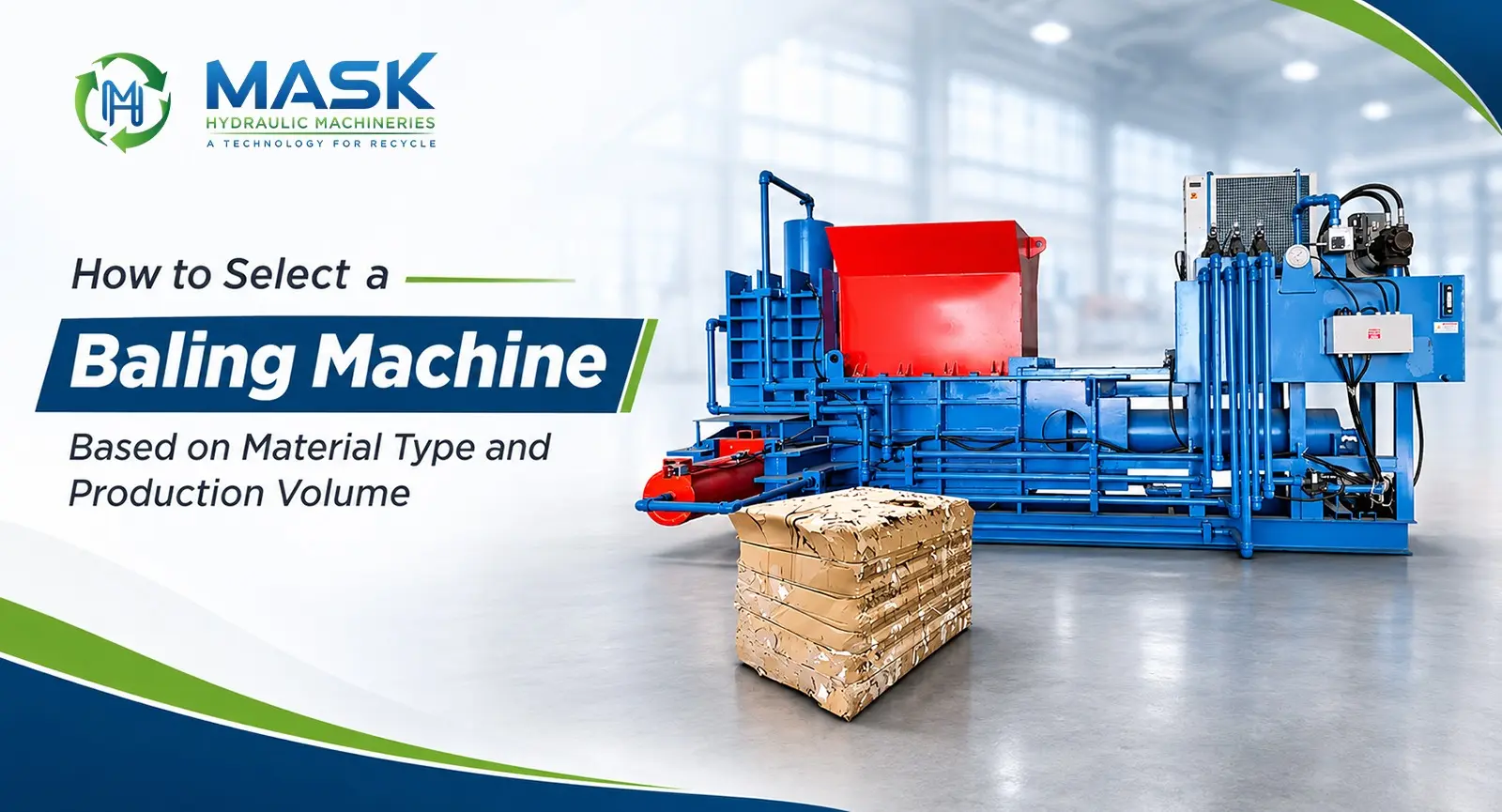
Quick Summary: The right baling machine depends on two things: what you press and how much arrives each day. This article matches materials to machines, explains vertical and horizontal designs, and lists what to ask suppliers.
Table of Contents
- Introduction
- Start With What You Are Pressing
- Consider Your Daily Volume
- Vertical or Horizontal: Which One Fits You
- Bale Size, Density, and Your Buyer
- Floor Space, Power, and Lead Time
- Servicing That Protects Your Investment
- Questions for Baling Machine Manufacturers
- Common Mistakes Buyers Make While Purchasing a Baling Machine
- Conclusion
Introduction
Choosing a baling machine looks simple until the first bale comes out wrong. This machine squeezes loose material, such as cardboard, plastic, textiles, tyres, or straw, into tied blocks that are easier to store, load, and sell. The problem is that no single machine suits every material or every plant. A small vertical press that handles a shop’s cardboard will struggle with a recycling yard’s daily tonnage, and a large horizontal line would waste money in a back room. Two questions settle most of the decision: what are you pressing, and how much of it arrives each day? This article answers both. You will see which machines suit which materials, how volume points to a vertical or horizontal design, what space and upkeep to expect, and what to ask baling machine manufacturers before you pay. Common buying mistakes and seven frequently asked questions close the guide. It is written for plant managers, recyclers, and procurement teams.
Start With What You Are Pressing
Material sets the shortlist before volume does. Here is a guide to which baling machine suits which material, based on what manufacturers have published:
| Material | Machine that suits it |
| Cardboard, plastic film, light metals | Vertical baler |
| Recycling, distribution, and factory waste | Horizontal baler |
| Whole tyres | Dedicated tyre baler |
| Textiles, cans, polystyrene | Dedicated machine for each |
| PET bottles, straw | Large horizontal lines in supplier examples |
Tyres show why dedicated machines exist: a tyre baler cuts volume by roughly 80 percent, which lowers transport costs. If your material is unusual, ask for a trial press before you buy. Also ask what your buyer expects, because the bale size and density a recycler accepts should guide the machine you choose.
Consider Your Daily Volume
Volume then narrows the choice. One guide offers this rough ladder:
- A couple of bales a day: a compact or entry-level vertical machine
- Mid-range output: a stronger vertical or a semi-automatic model
- Continuous, high output: a horizontal machine with automated feeding
Sources disagree on where horizontal begins. A trade article suggests a horizontal baling machine once you bale more than three tons of recyclables a day, while a supplier guide ties its large horizontal example to more than 10 tons a day. Use both as ranges, and leave room to grow, because a slightly oversized machine beats one that becomes the problem.
Units matter here. Ten tons a day over an eight-hour shift is only 1.25 tons an hour, far below the 12 to 15 tons an hour of the large example below. Convert everything to the same unit before comparing machines.
Vertical or Horizontal: Which One Fits You
Two supplier examples make the gap concrete. Both come from one baling machine manufacturer’s promotional guide, so treat them as illustrations:
- Vertical (60 T): 5 to 8 bales an hour, bales about 1100 by 700 mm, machine weight 2.2 tonnes, 15 kW motor.
- Horizontal (160 T): 12 to 15 tons an hour, mainframe about 13 by 4.3 by 5.8 m, 28 tonnes, 45 kW plus 7.5 kW.
Vertical machines fit shops, back rooms, and in-plant scrap, and operators remove bales by hand. Horizontal machines press more, use less labour, and make denser bales. One vertical downstroke model produces bales weighing up to 1,600 pounds, so bale weight varies widely by design.
Bale Size, Density, and Your Buyer
Baling machines press to different shapes. The vertical example above makes bales of roughly 0.39 to 0.69 cubic metres, a figure worked out from its listed dimensions, while the horizontal example lists material density of 500 to 600 kg per cubic metre. Your buyer, transporter, and storage space all prefer a consistent size.
Settle the target bale before you shop, not after delivery, and share it with every supplier you contact.
Floor Space, Power, and Lead Time
The vertical example measures 1600 by 1100 mm but stands 3200 mm tall, so check ceiling height. The horizontal mainframe covers roughly 56 square metres before its conveyor. Horizontal lines need more than floor area. The supplier example above also needs a foundation, a conveyor, and heavier power supply, while the vertical machine needs minimal installation.
Ask about delivery of the baling machine. That supplier quotes 30 to 45 days for made-to-order machines. Confirm your own lead time in writing. Confirm power supply and foundation details before you pour concrete.
Servicing That Protects Your Investment
A baler is used over years, so plan this early. One guide suggests professional servicing every year or every 500 to 1,000 operating hours and claims a 15 to 25 year life with good maintenance. Another advises greasing bearings, hinges, and chains once or twice a week, with a yearly oil change on vertical balers. Abrasive materials, such as aluminium cans, wear horizontal floors faster. Ask for the service interval in the manual, and log every oil change and greasing visit so you can show the schedule was followed.
Questions for Baling Machine Manufacturers
Specification sheets rarely answer the awkward questions. Put these to every supplier:
- Material test: Can they press a sample of your waste?
- Output: Is capacity stated in tons an hour or bales an hour? The two cannot be compared directly.
- Bale: What size, weight, and density will your buyers accept?
- Site: What floor, power, and conveyor does the machine need?
- Service: Who supplies spares and trains your operators?
- Safety: Which guarding and emergency stops come fitted?
- References: Can you visit a running installation?
Written answers beat verbal promises every time.
Common Mistakes Buyers Make While Purchasing a Baling Machine
Most regrets trace back to a few shortcuts:
- Sizing for current volume and ignoring next year’s
- Comparing tons an hour with bales an hour
- Forcing tyres, textiles, or polystyrene through a general-purpose press
- Ignoring floor space until the machine arrives
- Skipping operator training, so bales come out uneven
- Choosing on price alone, then paying for downtime
Test your assumptions before signing the order.
Conclusion
The best machine is the one that matches your material, your daily volume, and your floor space today, with a little space to grow as your volume rises. Test a sample press, compare outputs in the same units, and plan servicing before delivery. Mask Hydraulic Machineries offers a baling machine for plants that want to compress waste into manageable bales, and you can discuss material, capacity, and bale size through its website. Thoroughly inspecting and then selecting the machine helps save a lot of money and with that you get the right product according to your business requirements.
FAQs
What is a baling machine?
A baling machine is used to compress loose material into tied bales that are easier to store, move, and sell.
Which baler suits cardboard?
A vertical baler suits cardboard, plastic film, and light metals at low to medium volume.
When should I choose a horizontal baler?
You should choose a horizontal baller, when output is continuous and high. One trade article suggests above three tons a day.
Can one machine press tyres and textiles?
No, it is not possible for one single machine to press tyres and textiles. Tyres, textiles, and cans usually need dedicated machines.
How often should I service it?
One guide suggests yearly, or every 500 to 1,000 operating hours.
What is the lead time?
The lead time of this machine is 30 to 45 days for made-to-order machines. Ask yours, and compare it with your project dates.

Comments are closed